No Name, No Face, No Mercy: The Invisible Killers Quietly Owning Every Leaderboard in North America
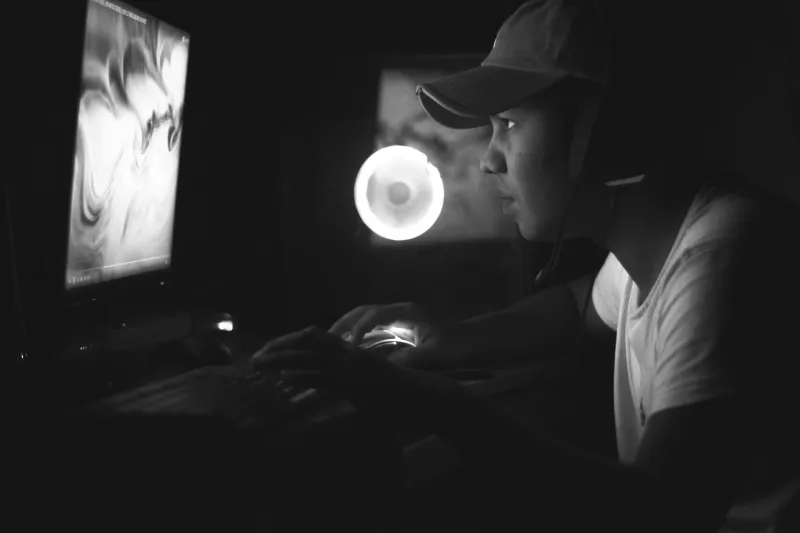
Somewhere in the top 50 of a major ranked ladder right now, there's an account with a generic username, zero social media footprint, and a win rate that would make most professional players uncomfortable. No Twitch channel. No Twitter bio. No clip compilation going viral on Reddit. Just games played, games won, and a rank that speaks for itself.
These are North America's ghost players — and they might be the most dangerous competitors in the scene.
The Brand Economy and What It Costs You
Modern esports has a weird tax built into it. The moment you go public — the moment you start streaming your ranked games or posting highlight clips — you stop being just a player and start being a product. Your tendencies get catalogued. Your decision-making gets dissected on YouTube. Your preferred agents, champions, operators, or hero picks get screenshotted and studied by anyone motivated enough to search your name before a match.
Top streamers and pro-adjacent content creators deal with this constantly. Opponents queue into them already knowing their tendencies. That's not paranoia — it's just how information works in 2025. The internet is a giant scouting report, and if you're on it, you're in the report.
Ghost players opted out of that entirely.
"You can't counter-prep someone you can't find," said one high-ranked Valorant player — top 200 Radiant, multiple accounts, zero public presence — who agreed to talk on condition of strict anonymity. "I've played against people who clearly knew my tendencies before the game started. That stopped happening the second I went dark."
Obscurity as a Tactical System
This isn't just about dodging scouting. The invisibility runs deeper than that, into something more psychological.
When you have an audience, you perform for the audience. It's human nature. Streamers make calls they know will pop off on clip. Content creators hold angles longer than they should because the chat wants to see the multi-kill. Ego creeps into decision-making in ways that are almost impossible to notice in real time.
Ghost players don't have that problem. There's no chat to impress. No highlight reel to protect. No brand narrative that demands you be the aggressive carry instead of the guy who rotated early and won the round quietly. Every decision gets made purely on merit — what wins the game, not what looks good losing it.
That's a significant edge. Competitive psychology research has consistently shown that external performance pressure — even self-imposed pressure tied to identity and reputation — degrades decision quality under stress. Ghost players have surgically removed that variable.
The Culture Behind the Curtain
This isn't a new phenomenon, but it's grown into something more deliberate and more organized than most people realize.
In certain corners of US competitive gaming communities — private Discord servers, invite-only scrimmage groups, closed forums that don't show up in a Google search — there's an entire subculture built around the philosophy of playing invisible. Some of these players rotate accounts regularly. Some use VPNs to obscure their regional data. Some have been offered content deals and turned them down flat.
The reasons vary. Some are genuinely private people who got into gaming for the competition and never wanted the parasocial circus that comes with going public. Others are former semi-pros or ex-team players who burned out on the visibility and rediscovered their love for the game the moment they stopped being watched. A smaller subset are almost ideological about it — true believers in the idea that anonymity is the purest form of competitive respect, because it means you're only there to win.
"Going public is a choice to split your focus," explained another source, a former collegiate player who now maintains multiple high-ranked accounts across three different titles under names no one would recognize. "I'm not saying it's wrong. But it's a choice. And I made a different one."
What Happens When the Ghost Shows Up in Your Lobby
Ask anyone who's played against one of these accounts and they'll describe the same experience. The player is technically flawless but somehow hard to read — not because they're flashy, but because they're efficient in ways that don't have a signature. No trademark plays. No recognizable patterns. Just clean, pressure-applying, win-oriented gameplay that doesn't give you anything to grab onto.
In team environments, this becomes even more disorienting. Ghost players don't telegraph emotion. They don't flame, don't taunt, don't give you behavioral data to work with. You can't tilt them by killing them because they don't react. You can't get in their head because there's no public version of their head to get into.
For ranked solo queue — which is already a chaotic, information-poor environment — this is borderline unfair. You're going in blind against someone who prepared for exactly that dynamic.
The Flip Side: What Ghosts Give Up
It's worth being honest about the trade-offs, because this isn't a flawless strategy.
Anonymity has a ceiling. If you're aiming for actual pro play — a roster spot, a league contract, a path through the official competitive infrastructure — you need visibility. Scouts need to find you. Organizations need to vet you. The ghost approach works beautifully for ranked domination and for the personal satisfaction of knowing you're one of the best in the region, but it can quietly close doors that require someone to know your name.
There's also a longevity question. Gaming is more fun with community, and complete isolation from the social side of competitive play can wear on people over time. Some of the players in this space eventually do go public — not for the money, but because the silence gets heavy.
And let's be real: part of what makes competition meaningful is recognition. Ghost players trade that away deliberately, and not everyone is built to be okay with that.
The Lesson the Rest of Us Should Take
You don't have to go full ghost to steal something useful from this philosophy.
The core insight — that visibility creates exploitable information and ego overhead that costs you real in-game decisions — applies at every rank. If you're loading into ranked games with your main account that's linked to your Twitter and your clip channel, opponents can research you. More importantly, you're playing with an audience in your head even when no one's watching.
Stripping that away, even partially, changes how you play. You stop caring about the play that looks good and start caring about the play that wins. That shift alone is worth something.
North America's ghost players figured that out and took it to its logical extreme. They disappeared entirely — and in doing so, became some of the hardest competitors on the continent to beat.
No stream. No posts. No mercy.
Just the leaderboard, and their name sitting at the top of it.