Garage Gladiators: Meet the American Teens Building Their Own Path to Esports Glory
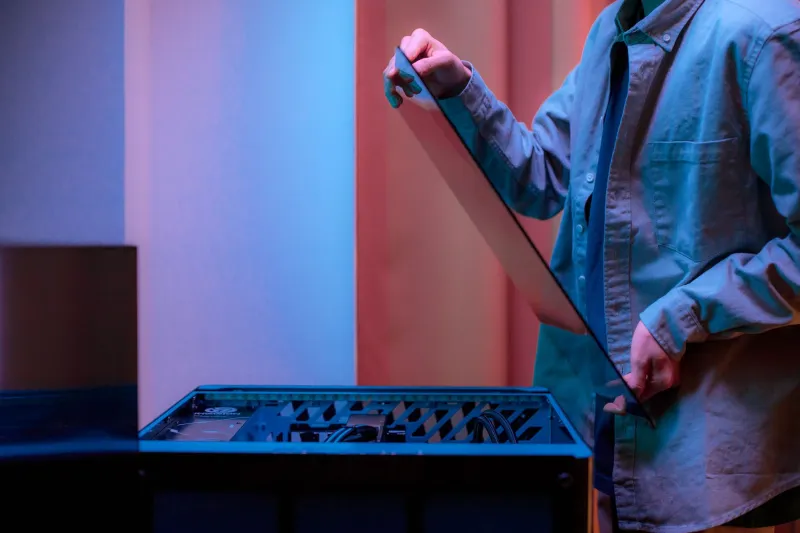
Somewhere in a suburb outside Columbus, Ohio, a 17-year-old named Marcus has zip-tied a custom-built input lag tester to the side of his monitor stand. He built it himself — a microcontroller, a photodiode, some breadboard wiring — for about $40 in parts from Amazon. It measures the actual response time between his click and the on-screen result, down to the millisecond. No major esports organization paid for it. No sponsor sent it to him. He figured it out on YouTube and a Reddit thread at 1 a.m. on a school night.
He's not alone.
The Rise of the DIY Competitor
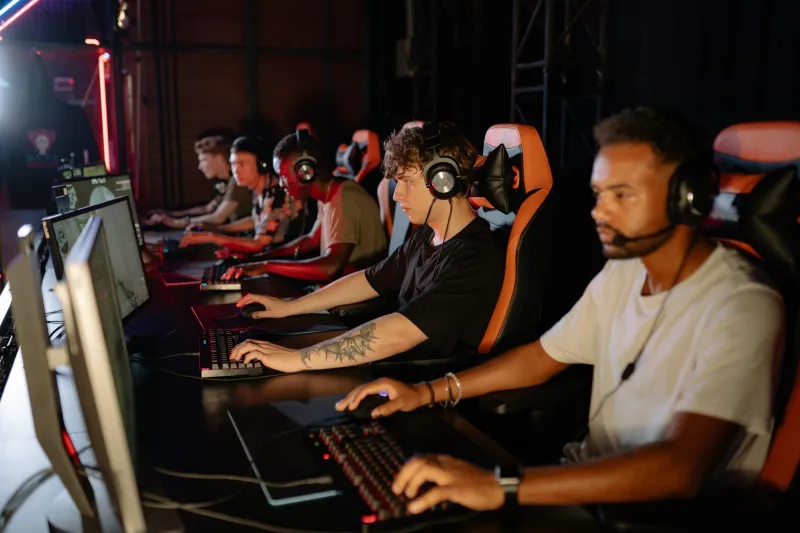
Across the United States, a scrappy wave of teenage players is doing something that feels almost anachronistic in an era of polished esports orgs and six-figure training facilities: they're building their competitive edge with their own hands.
We're talking about homemade monitor response testers, custom polling rate rigs assembled from off-the-shelf microcontrollers, self-coded stat dashboards that pull match data from game APIs and surface patterns that no commercial tool bothers to track. These aren't kids with rich parents buying them the best gear — they're kids who wanted the best gear, couldn't afford it, and decided to reverse-engineer it.
The ethos is pure American garage inventor: if you can't buy the advantage, build it.
"I wanted to know if my monitor's actual response time matched the spec sheet," Marcus explained over Discord. "It didn't. Most monitors don't. Now I know exactly what I'm working with, and I've dialed my settings around the real numbers, not the marketing numbers."
What They're Actually Building
The setups vary wildly depending on the builder's skills and obsessions, but a few recurring projects have become something like folk blueprints in this community.
Custom Polling Rate Rigs
Polling rate — how many times per second your mouse reports its position to your PC — is a spec that gear manufacturers have started marketing aggressively. But a growing number of DIY players aren't trusting the box. Using open-source software and USB analysis tools, they're verifying and sometimes modifying their mouse firmware to stabilize polling at specific rates that feel better for their playstyle.
Jayla, 16, from a suburb of Atlanta, spent three weeks modifying her mouse firmware after watching a technical breakdown by a hardware YouTuber. "The difference between 1000Hz stable and 1000Hz with jitter is real," she said. "I can feel it. And I proved it with my own tests."
Homemade Input Lag Testers
This one has spread the furthest. The concept is simple — a light sensor pointed at the screen, a microcontroller recording timestamps — but the execution requires patience and a willingness to learn basic electronics. Tutorials exist, but they're scattered, and every build is a little different based on what parts you can source.
The payoff is real, tangible data about your specific monitor, your specific PC, your specific in-game settings. It's the kind of information that gear review sites approximate with thousand-dollar equipment. These kids are getting close enough with a $35 Arduino.
Self-Coded Stat Trackers
The third pillar of this movement is software. Several players we spoke with have written their own stat-tracking tools — Python scripts, mostly — that pull from public game APIs and build custom dashboards. Not the generic stats that sites like Tracker.gg surface, but deeply personal ones: first-blood percentage at specific map locations, win rate based on which agent or character was picked into their matchup, performance variance by time of day.
Tyler, 18, from Portland, Oregon, has been running his custom tracker for eight months. "I found out I win like 12% more often when I queue before 9 p.m.," he said, laughing. "Sounds dumb, but I adjusted my schedule and my rank went up. No app was going to tell me that."
Why This Matters for American Esports
Here's the bigger picture: the dominant narrative around esports development in the US has centered on institutions — college programs, org pipelines, academy rosters. And those things matter. But they also have gatekeepers, geographic limits, and financial barriers.
The DIY movement has none of those. A kid in rural Montana with a decent PC and a curiosity about electronics can access the same information, build the same tools, and develop the same edge as someone in a major city with a college esports scholarship. The internet is the great equalizer, and these teenagers are using it aggressively.
There's also something philosophically distinct about players who understand their equipment at a mechanical level. They're not just consumers of the competitive ecosystem — they're engineers of it. That kind of deep technical fluency tends to produce players who adapt faster, troubleshoot better, and think more creatively about problems.
Some coaches in the collegiate scene have started noticing. "I'd take a self-taught kid who built their own performance rig over a player who just bought the most expensive setup any day," said one college esports coach who asked not to be named. "The builder understands why things work. That translates to game sense."
The Limits of Going It Alone
It's not all upside. These players are building without safety nets — no coaches correcting flawed methodology, no peers to sanity-check their conclusions. Marcus admitted that he spent two months convinced his custom input lag tester was broken because his results didn't match what a popular YouTuber had found, before realizing the YouTuber had used different in-game settings.
There's also the time cost. Building a polling rate rig or a stat tracker takes hours that could go toward actual practice. For players trying to balance school and competitive gaming, that's a real tradeoff.
But ask any of them if they'd trade their DIY setup for a plug-and-play org solution, and the answer is almost universally no.
"I know exactly what my setup does and why," Jayla said. "Most players just trust that their gear works. I've tested mine. That's not nothing."
It's not nothing at all. In fact, it might be exactly the kind of edge that doesn't show up on a spec sheet — but shows up on the leaderboard.