Ice in the Veins: How the Best Competitors in the US Train Their Brain to Go Numb When It Matters Most
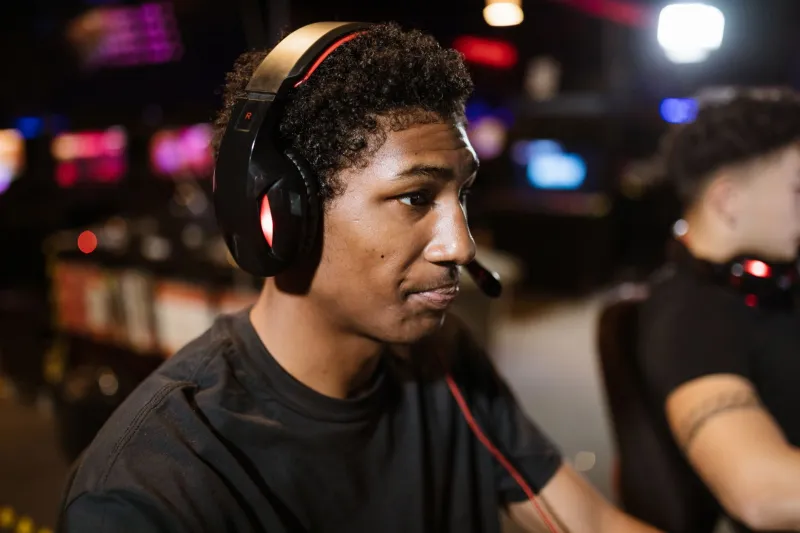
You've seen it happen a hundred times. A player takes one bad fight, drops a clutch round they should've owned, and suddenly the whole game unravels. The mechanics are still there. The game sense is still there. But something else — something invisible — has completely taken over, and the result is a performance that looks nothing like the person who climbed to that rank in the first place.
That invisible thing is emotion. And the players at the very top of the US competitive scene have figured out how to kill it on command.
This isn't about being robotic. It's not about not caring. It's about something far more deliberate — a trained psychological response that top competitors have been quietly building into their routines for years. Call it the killswitch. The players who have it don't just play better under pressure. They become a different kind of threat entirely.
Tilt Is a Mechanical Problem, Not a Mental One
Here's the reframe that changes everything: tilt isn't a character flaw. It's a physiological response. When frustration spikes — after a bad death, a teammate's mistake, a dropped objective — your body actually shifts into a low-grade stress state. Cortisol rises. Reaction time slows. Decision trees that your brain normally runs automatically start requiring conscious effort. You're not playing worse because you're weak. You're playing worse because your nervous system is running interference.
Sports psychologists who work with esports athletes in the US have been pushing this framing hard over the last few years, and the top players are listening. The moment you accept that tilt has a biological mechanism, you stop trying to "just calm down" — which never works — and start treating it like a system that can actually be interrupted.
The Compartmentalization Protocol
One of the most consistently reported techniques among high-ranked players is what psychologists call emotional compartmentalization — essentially, building a mental wall between what just happened and what's about to happen.
In practice, this looks different for everyone. Some players use a physical anchor: pressing their feet flat into the floor, feeling the chair against their back, grounding themselves in the physical space before the next round begins. Others use a verbal reset — a short internal phrase, almost like a mantra, that signals to the brain that the previous play is closed and no longer relevant to the current moment.
The key isn't the specific technique. It's the consistency. These rituals work because repetition trains the brain to associate that action with a mental state. Over hundreds of sessions, the reset becomes automatic. The moment something goes wrong, the protocol fires — not because the player consciously decided to use it, but because it's been drilled into muscle memory the same way a crosshair placement routine gets drilled.
Breathing Is Not a Soft Skill
If you rolled your eyes at the word "breathing," you're not alone — and you're also leaving performance on the table.
Box breathing, specifically, has become something of an open secret among serious US competitors. The pattern — inhale for four counts, hold for four, exhale for four, hold for four — directly activates the parasympathetic nervous system, which is the biological off-switch for the stress response. Military special operations units have used this for decades. High-stakes surgeons use it. And increasingly, the players grinding ranked queues at the highest levels are using it between rounds, during loading screens, and in the seconds before a critical team fight.
The research backs it up hard. Controlled breathing protocols measurably reduce heart rate variability, lower cortisol response, and improve cognitive clarity under pressure — all in under 60 seconds. That's not a soft skill. That's a mechanical edge with a timer on it.
Ego Is the Real Final Boss
Tilt from a bad play is one thing. But the sneakier, more dangerous version — the one that even experienced players struggle to catch — is ego-driven tilt. This is the frustration that comes not from losing, but from feeling like you shouldn't be losing. The entitlement of "I'm better than this opponent" short-circuiting your actual read of what's happening in the game.
Top competitors who've been candid about this describe ego as the hardest thing to train against because it disguises itself as confidence. The player who refuses to adjust their strategy because they're convinced they're playing correctly isn't being disciplined — they're being emotionally rigid. And emotionally rigid players get read, exploited, and destroyed by anyone who's actually adapting.
The fix, according to players who've worked through this, is radical situational neutrality. Strip the outcome of any narrative. A death isn't an injustice. A loss isn't a reflection of your rank or your worth as a player. It's data. What happened, what caused it, and what adjustment does the next 30 seconds require? That's the entire question. Everything else is noise.
Building the Killswitch: What Practice Actually Looks Like
None of this happens by accident, and none of it shows up just because a player decides to "be more zen." The competitors who've actually developed this level of emotional control treat it like a training block — scheduled, intentional, and tracked.
Some players deliberately introduce frustration into practice sessions. They'll queue into situations they know will be tilting — bad team compositions, unfavorable matchups, deliberately chaotic lobbies — not to win those sessions, but to practice the reset under real emotional load. You can't train the killswitch in comfortable conditions. It only gets built by actually having to use it.
Others keep session journals that log not just performance metrics but emotional state — when tilt hit, what triggered it, how long it took to recover, and whether the recovery technique worked. Over time, patterns emerge. Players start to recognize their specific triggers and develop preemptive countermeasures before the spiral even starts.
The Competitive Edge Nobody Talks About
Here's the thing about emotional control in competitive gaming: almost nobody talks about it openly, because admitting you've had to train it feels like admitting a weakness. But the players who've done the work know it's the opposite.
Mechanical skill has a ceiling. Game sense can be studied and copied. But the ability to stay completely locked in when everything is going sideways — to keep making correct decisions while your opponent is cracking, to run your protocol when the lobby is chaos and the stakes are real — that's the edge that doesn't show up on a stat sheet and doesn't get patched out.
The killswitch isn't about feeling nothing. It's about choosing, deliberately and repeatedly, to let the right things drive your decisions and nothing else. That's the hardest grind in the game. And the players who've put in the reps? You already know who they are. You've watched them dismantle tilted opponents in overtime and make it look effortless.
It was never effortless. It was just trained.