Wired to Win: How Elite Teams Dissect Near-Defeats to Engineer Comebacks on Command
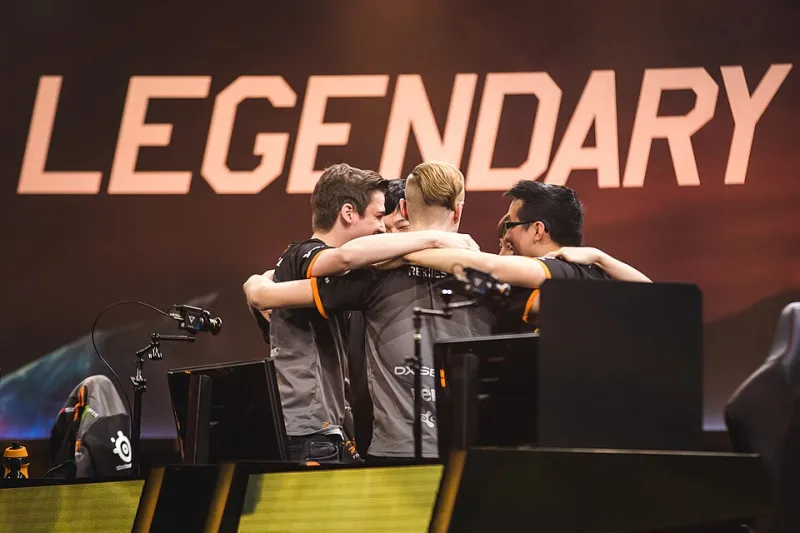
Photo: Bruce Liu, CC BY-SA 3.0, via Wikimedia Commons
Every hardcore competitor knows the feeling. You're down two rounds, the economy is shattered, your IGL just called a timeout, and the crowd — or the lobby — is already writing your obituary. Most teams crumble there. A few don't. And the gap between those two groups isn't talent. It's architecture.
The best squads in competitive play aren't just hoping clutch moments happen. They're engineering them. Deliberately. Repeatedly. In practice servers that nobody outside the org ever sees.
This is the choke code — and the teams cracking it are building a comeback machine that runs whether they feel confident or not.
The Anatomy of a Near-Loss
Coaches at the highest level of play have started treating near-losses the same way aviation engineers treat near-miss incidents: as gold-standard data. Every round where a team nearly collapsed but didn't — or where an opponent nearly collapsed and did — gets flagged, timestamped, and pulled apart frame by frame.
"The near-loss is actually more valuable than the clean win," said one assistant coach from a top-10 North American roster who asked not to be named. "When you win cleanly, you don't learn your limits. When you almost lose and recover, you find out exactly what broke down and exactly what saved you. That's the blueprint."
The process typically starts with a specific kind of VOD review. Instead of watching the full match, coaching staff isolate what they call "inflection windows" — the 30-to-90-second stretches where momentum visibly shifted. They're looking at three things: decision latency (how long did it take for someone to make the key call?), positional deviation (who moved off-script and why?), and communication density (was there too much noise or a silence that killed the play?).
What they find, almost universally, is that comebacks don't happen because someone went godmode. They happen because one player or one caller compressed their decision tree at exactly the right moment.
Decision Trees Under Fire
Here's where it gets interesting. Elite coaching staffs aren't just studying what decisions were made in high-pressure moments — they're reverse-engineering the decision tree itself to figure out which branches consistently lead to flips.
Think of it like this: in a clutch scenario, a player typically has three to five viable options. Most players cycle through all of them mentally, burning precious milliseconds. Top-tier players in high-pressure moments have already pruned that tree down to one or two branches before the situation even develops. The question coaches are obsessed with is: how did they get there faster?
The answer, according to multiple coaching staff members we spoke with across different titles, is deliberate scenario drilling. Not aim training. Not deathmatch. Specific, curated scenarios that replicate the exact conditions of a choke moment — resource disadvantage, time pressure, communication breakdown — run over and over until the decision-making becomes reflexive rather than rational.
"We'll set up a round where our guys are down four-versus-one, or they're on a full eco against a bought-up team, and we just run it," explained another coach whose team recently placed top-four at a major North American LAN. "Not to win the scenario. To get comfortable being uncomfortable. The goal is to make that pressure feel boring."
Micro-Timing: The Clock Nobody Talks About
One of the most underreported elements of successful comebacks is micro-timing — the specific moments within a round or match where the psychological window for a flip is actually open.
Professional analysts have started charting what they call "momentum debt" in opponents. When a team strings together several dominant rounds, they accumulate a kind of cognitive debt: they start anticipating the win rather than executing the play. That's the window. Elite teams aren't trying to claw back randomly — they're waiting for the exact moment their opponent's mental load peaks and then striking.
This isn't mystical. It shows up in the data. Rotation timing gets slightly slower. Utility usage becomes more conservative. Communication clips get shorter and more casual. Coaches who know what to look for can actually call the flip before it happens.
"We have a term for it internally," said one analyst. "We call it 'the lean.' When a team starts leaning into a lead instead of playing through it, that's when we tell our guys to accelerate. That's when the comeback is available."
Building the Practice Protocol
So how do teams actually drill this stuff? The methodology varies by org, but there are a few consistent pillars that show up across the board.
Scenario isolation. Instead of running full scrims, teams carve out dedicated practice blocks — sometimes 30 to 45 minutes per session — where they exclusively run deficit scenarios. Specific round counts, specific economy states, specific map positions. The goal is volume: get reps at the exact conditions where teams historically choke.
Verbal commitment. Coaches require players to verbalize their decision tree before executing. Not during — before. This builds the habit of pre-processing options under pressure rather than reacting in the moment, which compresses decision latency over time.
Opponent modeling. The team's analyst builds out a simplified behavior model for common opponents — tendencies, fallback positions, communication patterns under pressure. Players study these models so that when they're down in a real match, they're not just reacting to what's happening. They're predicting what's coming next.
Post-drill debrief. Every clutch drill ends with a structured five-minute debrief. What was the first option you considered? What made you abandon it? What did you see that triggered the decision you made? This makes the implicit explicit and accelerates learning across the whole roster.
What This Means for Ranked Grinders
You don't need a full coaching staff to steal this framework. The core principle translates directly to solo and small-group ranked play.
Start by flagging your own inflection windows. After every session, pull one round where you nearly lost and find the exact moment the tide could have turned. Don't watch the whole VOD — just that window. Ask yourself what decision you made and what made you make it.
Then start drilling deliberately uncomfortable scenarios. Queue into situations you normally avoid. Play the eco round like it matters. Run the retake when you're outnumbered. The goal isn't to win those specific rounds — it's to make the pressure feel familiar so your decision-making doesn't slow down when it counts.
The teams building comebacks on demand aren't more talented than the ones who choke. They've just done the work to make sure that when the moment arrives, their brain doesn't flinch.
That's the code. Now go crack it.