Ping Poverty Is a Playstyle: How US Players Are Winning From 80ms Behind
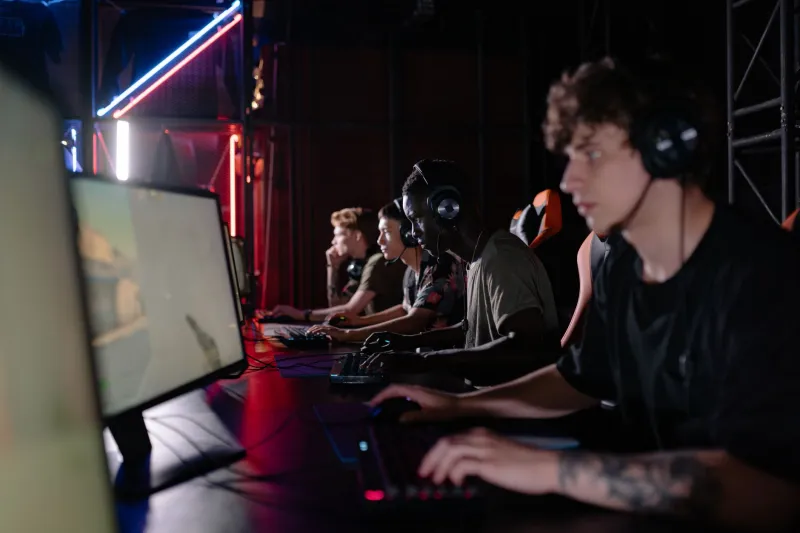
Ask a Denver ranked grinder what their ping is and you'll get a number, a sigh, and a short story about the Dallas server. Ask a Chicago player the same question and you'll get a shrug. That gap—roughly 40 to 80ms depending on the night, the ISP, and whether somebody in the house is streaming—is the invisible tax on a huge chunk of the US ladder. The lazy take is that bad ping is an excuse. The sharper take, the one you hear from coaches and ladder veterans who actually review their own deaths, is that ping poverty is a playstyle problem before it is a connection problem.
The Lag Excuse Has a Shelf Life
'Bad ping is not a permission slip. It is a scouting report,' says Marcus 'Sable' Reed, a Dallas-based coach who works with Tier-2 NA teams and a rotating cast of ranked savages. 'At 90ms and up, with jitter, you are playing a different game. At 40 to 80ms, stable, you are playing the same game with a slight delay. The players who climb are the ones who stop pretending those are identical.'
That distinction matters. A stable 60ms is not the same as a spike-riddled 60ms. Packet loss is a different beast than delay. The first step for any US player outside the central server hubs is to stop treating 'ping' as one number. Log it. Note the time of night. Note the server. Note whether your first contact deaths are actually late reactions or just bad crosshair placement. Reed says the players who improve fastest are the ones who separate the mechanical mistake from the network tax. If you blame the server for a dry peek into an open angle, you are not scouting. You are coping.
Crosshair Placement for a World That Arrives Late
High-latency players cannot afford pixel-perfect pre-aim on every angle. The image of the enemy arrives a beat late, and if your crosshair is parked on a sliver of geometry that only works at 15ms, you are asking for a coin flip. The adjustment is not to aim sloppier. It is to aim wider and hold space that survives the delay.
US ladder veterans talk about 'body coverage' instead of 'headline angles.' If you are holding a long corridor from the Midwest, you want your crosshair at a height and distance that still gives you a chance when the peek arrives late. You want to use cover that lets you reset. You want to avoid the ego hold—the one-tile angle that looks clean in a clip and dies in real time. On defense, that means anchoring closer to safety and using utility to shrink the number of places you can be swung from. On offense, it means pre-aiming common off-angles and letting the trade happen instead of demanding the first bullet.
Peeker Timing: Stop Racing, Start Scheduling
The worst habit latency-poor players develop is racing. They wide-swing because they feel behind, then blame the server when they lose. The better pattern is to schedule the peek. Force the enemy to react to something—a smoke, a molly, a stun, a noise—and then take the space while their screen is full of your utility. You are not trying to out-react the server. You are trying to make the server irrelevant for one second.
'If you are at 70ms and you dry-swing a guy holding an angle, you are donating,' says a ladder veteran from the Pacific Northwest who asked to go by 'Harbor.' 'But if you pop utility, change the timing, and swing with a teammate or off a sound cue, the ping matters less. You are not racing. You are scheduling.' That is the identity shift. The laggy player who climbs is not the one praying for a better route. It is the one who builds rounds where the first contact happens on their terms.
Utility Routines That Buy Back Milliseconds
Utility is the great equalizer for ping-poor players because it does not care about your reaction time. A well-placed smoke denies information. A molly denies space. A stun forces a camera turn. The routine is simple: pre-place, pre-plan, and pre-commit. Do not freehand your utility at 60ms and hope. Know the lineup. Know the timing. Know what space you are taking after it lands.
That means fewer highlight-reel plays and more boring, repeatable setups. Smoke the angle that would otherwise require a perfect peek. Molly the corner that forces a reposition. Use a recon tool to make the enemy move before you do. The goal is to create a round shape where your team's decisions are already made before the latency tax hits. That is how ping poverty becomes a tactical identity instead of a nightly complaint.
Build Repeatable Decisions, Not Server Hope
The final piece is review. For one week, write down every first-contact death. Was it a dry peek? A late trade? A utility mistake? A genuine network spike? You will probably find that half your 'lag deaths' are just bad decisions. The other half are real, and those are the ones you build around. Adjust your holds. Adjust your peeks. Adjust your utility. Stop praying for server advantage and start building rounds that do not need it.
Ping poverty is not noble. It is not an excuse, either. It is a constraint, and constraints breed style. The US players winning from 80ms behind are not waiting for the patch. They are already playing the next meta: slower, smarter, utility-first, and absolutely unbothered by your server.