Read the Room: The Underground Framework Top US Players Use to Own Every Meta Before It Exists
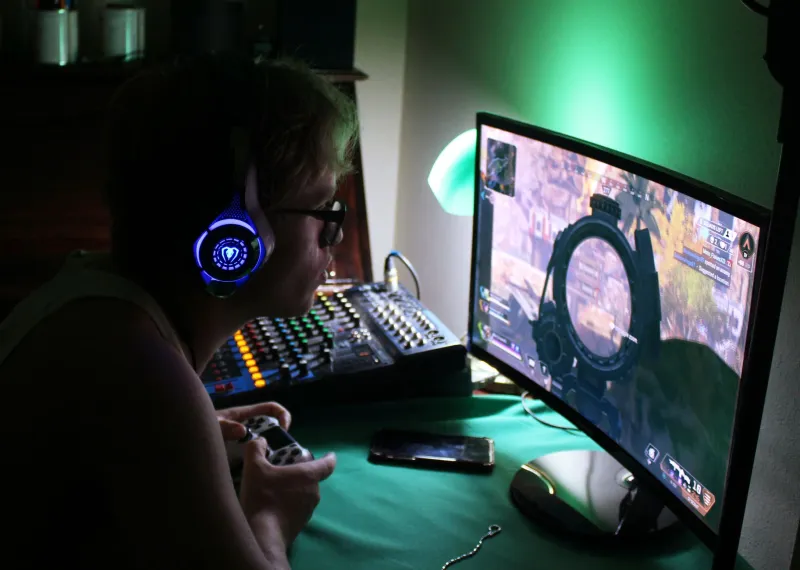
Photo: gamer analyzing data statistics screen competitive gaming setup, via newsroompost.com
Patch day is a bloodbath for most players. The notes drop, Discord lights up, Reddit spirals into chaos, and half the ranked ladder spends the next week playing the wrong things at the wrong time while the meta reshuffles. It's messy, it's reactive, and it's exactly where the sharpest players in the country make their biggest gains.
Because while everyone else is reading the patch — they've already been grinding it.
This isn't luck. It's a system. And once you understand how it works, you'll never look at a developer update the same way again.
Why Patch Day Is Already Too Late
Here's the uncomfortable truth: if you're waiting for a balance update to drop before you start adapting, you've already lost the first two weeks of the new meta. The players who dominate post-patch aren't faster learners — they're earlier starters.
The competitive edge in any live-service game doesn't live in the patch notes themselves. It lives in the signal that precedes them. Developer commentary, community manager posts, balance team interviews, beta test observations, pro player feedback threads — all of it is publicly available, largely ignored, and absolutely loaded with competitive intelligence for anyone willing to do the work.
Top-ranked players in North America have turned this intelligence gathering into a genuine pre-season ritual. Some run spreadsheets. Some maintain private Discord servers with a handful of trusted players where they pool observations. A few go deep enough to track individual developer accounts on social media, flagging every offhand comment about balance philosophy.
The goal is always the same: identify what's coming before it arrives, and get reps in now.
Case Study: The Weapon Nobody Was Running
Last year, a mid-ranked FPS player in the Midwest — we'll call him Dex, since he asked to stay anonymous — noticed something in a developer Q&A stream that most of the community scrolled past. The balance lead mentioned, almost in passing, that a particular weapon class had been "underperforming relative to its intended design space" and that the team was "exploring ways to bring it in line with the experience we want players to have."
To most viewers, that's filler. To Dex, it was a buy signal.
He spent the next three weeks grinding that weapon class exclusively. Not because it was good — it wasn't, not yet — but because he understood that "bringing something in line with intended design" almost always means a buff, not a nerf. He wanted the muscle memory before the masses arrived.
When the patch dropped, that weapon class got a significant damage and handling buff. Within 48 hours, it was everywhere in ranked. Dex was already running it at a 70-plus percent win rate with 200-plus rounds of reps behind him. He climbed two full rank tiers in two weeks while everyone else was still figuring out optimal loadout builds.
"I wasn't smarter than anyone," he told us. "I just listened to what the devs were actually saying instead of waiting for the patch notes to spell it out."
How to Read Developer Communication Like a Scout Report
Developer communication has a language, and once you learn to read it, the signal-to-noise ratio flips completely. Here's the framework that top players use to extract competitive intelligence from public-facing dev content.
Phrase mapping. Certain phrases in developer communication are almost universally predictive. "Underperforming relative to design intent" means a buff is coming. "Overtuned" means a nerf is imminent. "We're watching" means they're collecting data before acting — which usually means the change is 1-2 patches out. "We want this to feel more impactful" almost always precedes a mechanical buff, not just a number tweak.
Frequency tracking. If a weapon, ability, or strategy gets mentioned multiple times across different communication channels in a short window, that's a strong signal that it's on the balance team's radar. One mention is noise. Three mentions in two weeks is a pattern.
Inverse popularity analysis. Look at what's being played the least in high-level competitive and ask why. If something is underused despite having a reasonable kit, there's often a specific mechanical reason — and that mechanical reason is frequently what developers target in balance passes. Low-play assets with solid design bones are prime buff candidates.
Community sentiment cross-reference. High-level player complaints about specific counters or matchups often feed directly into balance decisions. If a significant portion of pro-level feedback is pointing at the same interaction, the devs are hearing it. Get ahead of the likely correction.
Building Your Pre-Patch Grind Protocol
Knowing the signal is one thing. Acting on it systematically is another. Here's how to structure your pre-patch prep so you're not just anticipating the meta — you're ready to dominate it the moment it arrives.
Set a weekly intel hour. Block 60 minutes every week — not on patch day, but mid-cycle — to consume developer communication. Watch the dev stream VOD. Read the community manager posts. Skim the balance team's social feeds. Treat it like film study. You're not looking for entertainment, you're looking for data.
Maintain a "watch list." Keep a running list of assets — weapons, abilities, strategies, compositions — that you've flagged as likely to shift in the next one to two patches. Update it weekly based on new intel. When something hits your threshold for confidence, start grinding it.
Separate learning reps from performance reps. When you're pre-grinding an asset that isn't currently meta, don't queue ranked with it immediately. Use unranked, custom lobbies, or lower-stakes modes to build your foundational reps. You want the muscle memory locked in before you bring it into environments where losses cost you.
Document your predictions. Keep a simple log of what you predicted and whether it happened. This isn't vanity — it's calibration. Over time, you'll learn which signals you're reading correctly and which ones you're misinterpreting, and your hit rate will improve.
The Compound Advantage
Here's what makes this framework genuinely dangerous over time: it compounds. Every cycle where you correctly anticipate a meta shift and arrive prepared gives you two to three weeks of ranked play where you're running something at high proficiency while opponents are still learning it. That's free MMR. Over six months of consistent practice, the gap between you and players who wait for patch day becomes enormous.
The meta doesn't belong to whoever adapts fastest. It belongs to whoever shows up first.
Stop reacting. Start predicting. The patch notes are a lagging indicator — the real information is already out there waiting for someone to pick it up.