Dead Hours, Live Gains: The Midnight Ranked Grind That's Quietly Minting New Champions
Dead Hours, Live Gains: The Midnight Ranked Grind That's Quietly Minting New Champions
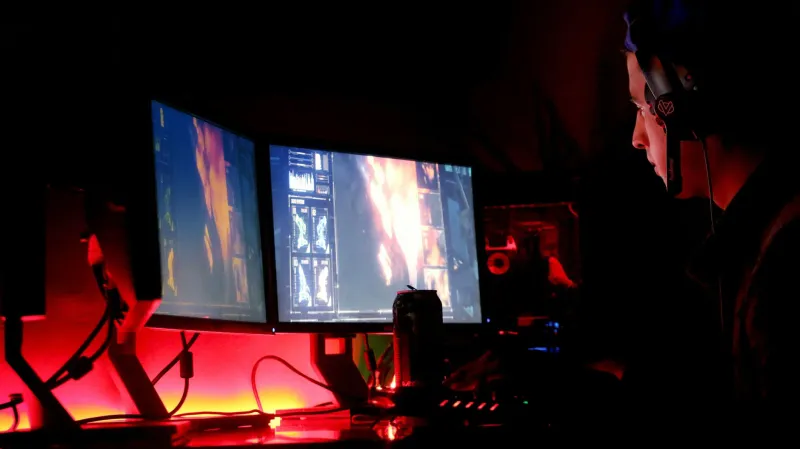
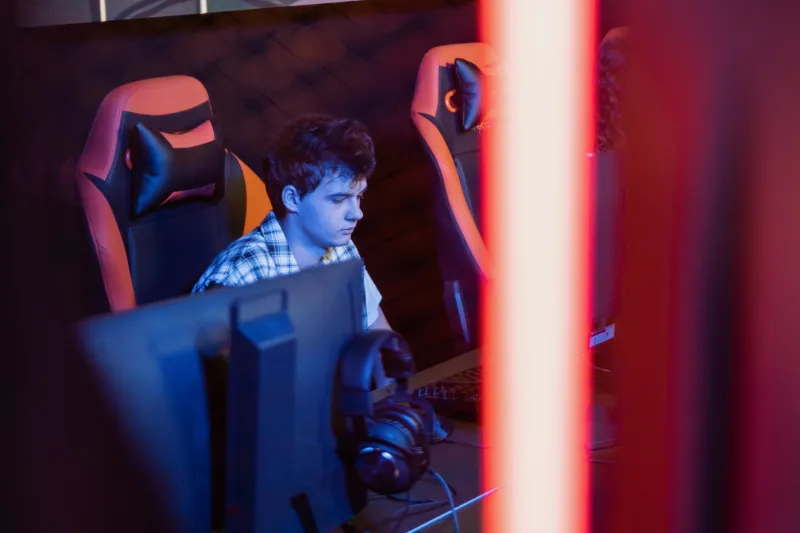
Your alarm goes off at 7 AM. You grind your day. By 10 PM you're queuing ranked, losing two in a row to a duo that clearly just woke up, and rage-closing the client. Meanwhile, somewhere in the same server region, a guy named KrakenPulse is three games deep into a six-win streak — at 1:30 in the morning.
This isn't a coincidence. For a growing slice of America's competitive gaming scene, the graveyard shift isn't just when they play. It's why they win.
The Ecosystem Nobody Talks About
Anyone who's spent serious time on ranked ladders across titles like Valorant, League of Legends, Apex Legends, or CS2 has probably noticed that the game feels different depending on when you queue. The mid-afternoon lobby hits different than the 2 AM one. But most players chalk that up to vibes — tired eyes, empty stomach, whatever.
The players who've actually mapped this out treat it like a strategic resource.
"The pool shrinks after midnight, but it doesn't get worse — it gets weirder," says Marcus, a Diamond-ranked Valorant player out of Phoenix who asked us not to use his last name. "You're playing against people who are either insanely dedicated or completely tilted from a bad session. There's almost no in-between. And once you figure out how to read which one you're dealing with, you can exploit it."
Marcus climbed nearly two full divisions over a three-month stretch by restricting his ranked play almost exclusively to 11 PM–3 AM windows. He tracked his win rate by time slot using a third-party overlay and found a 14-point swing between his prime-time sessions and his late-night ones — in favor of the late-night ones.
Fatigue Is a Weapon — If You're Not the One Who Has It
Here's the physiological reality that competitive players are quietly weaponizing: most people playing ranked at midnight are running on fumes. They started their session at 8 PM, hit a loss streak, and kept queuing to claw it back. By the time you sit down fresh at 12:30 AM, they've been grinding for four-plus hours.
Decision fatigue is real and it shows up in gameplay. Reaction times get looser. Macro decisions — rotations, resource management, positioning — start to fall apart first, well before mechanical skills do. A player who was executing clean fundamentals at 9 PM might be force-buying every round and ignoring the minimap by 1 AM.
"I'm not trying to play against people at their best," says Dani, a Plat-to-Diamond climber in League of Legends based out of Chicago. "I want to play against people who are exhausted and frustrated. That sounds cold, but that's literally what ranked is — you're trying to find edges wherever they exist."
Dani's logic is ruthless, but it's not wrong. Competitive play is about maximizing your win conditions, and human error is always a win condition.
The Server Behavior Angle
Beyond the human element, some players swear that server performance itself shifts during off-peak hours. The theory: fewer concurrent players means less strain on regional servers, which can translate to more consistent tick rates and lower variance in packet handling.
This one's harder to verify definitively — most publishers don't release granular server load data — but anecdotal reports from players across multiple titles consistently describe late-night sessions as feeling "cleaner." Less rubber-banding in movement-heavy games. More responsive ability registration. Fewer of those maddening moments where you clearly won the duel but the server disagreed.
Whether that's measurable or psychological is an open debate. But perception matters in competition. If you feel like the game is running better, you play with more confidence, and confidence compounds.
The Psychological Edge of Quiet
There's something else going on that doesn't get enough credit: the environment around the player.
Late night in most American households is quieter. No notifications blowing up your phone. No family walking through the room. No ambient chaos pulling your focus. For players who live in shared spaces — college dorms, apartments with roommates, family homes — the post-midnight window might be the only time they get genuine isolation.
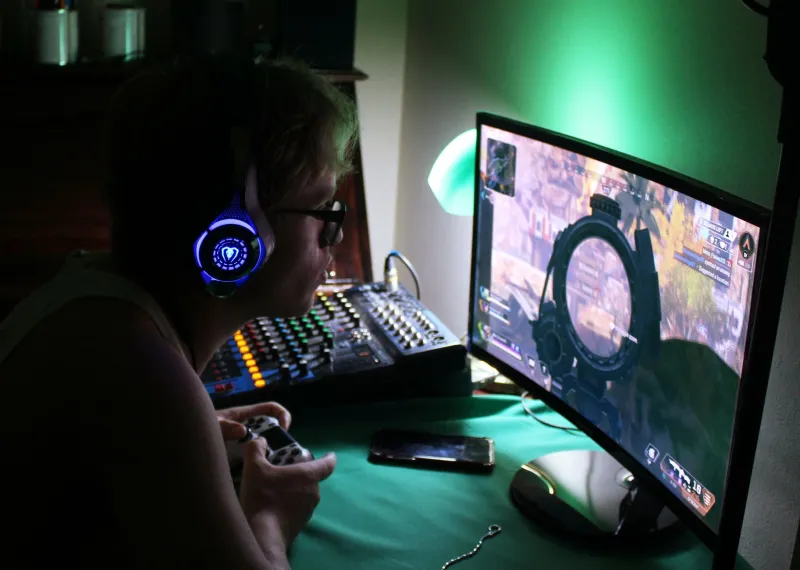
"I live with three other people," says Tyler, a Grandmaster-level Apex Legends player from Austin. "During the day there's always something happening. But after midnight I've got the living room to myself, the lights are down, and I'm just locked in. My mental game is a completely different level."
This lines up with what sports psychologists call the "quiet eye" principle — the idea that reduced external stimulation allows for deeper attentional focus. Competitive gaming demands the same kind of sustained attention as traditional sports, and the late-night environment naturally strips away a lot of the friction that disrupts it.
The Real Cost: Sleep Debt Is the Silent Elo Killer
Before you flip your schedule and start queuing at 1 AM every night, there's a brutal counterpoint that the graveyard shift enthusiasts don't always lead with: sleep deprivation will eventually destroy your game.
The same fatigue you're exploiting in your opponents will catch up to you if you're not managing your recovery. Players who run the midnight grind sustainably tend to do one of two things — they either sleep later in the morning to compensate, or they keep the late sessions to two or three nights per week rather than making it a daily habit.
"I don't do it every night," Marcus admits. "If I'm already tired going into the session, I won't touch ranked. I'd rather skip a night than play sloppy and give away LP I worked for."
The discipline to not queue when you're not sharp is probably the most underrated skill in the whole conversation. The graveyard shift advantage only works if you're the one who's rested.
Is It Real or Is It a Cope?
Honestly? Both, depending on the player.
For the disciplined, data-aware competitor who's tracking their win rates, managing their sleep, and choosing their queue windows deliberately — the late-night ladder is a legitimate strategic layer that most players completely ignore. The opponent pool is more exploitable, the environment is quieter, and the psychological conditions for peak performance are arguably better.
For the player who just can't stop queuing at 2 AM because they're tilted and chasing losses, the graveyard shift is just a story they tell themselves to justify bad habits.
The difference isn't the time on the clock. It's whether you're making a calculated choice or a compulsive one.
KrakenPulse is winning at 1:30 AM because he went to sleep at noon, woke up at 9 PM, and sat down at the keyboard fresh while everyone else was grinding themselves into the dirt. That's not luck. That's a system.
The question is whether you're building one — or just surviving until sunrise.