Cold Blood: The Science Behind Why Some Players Go Godmode When the Stakes Are Highest
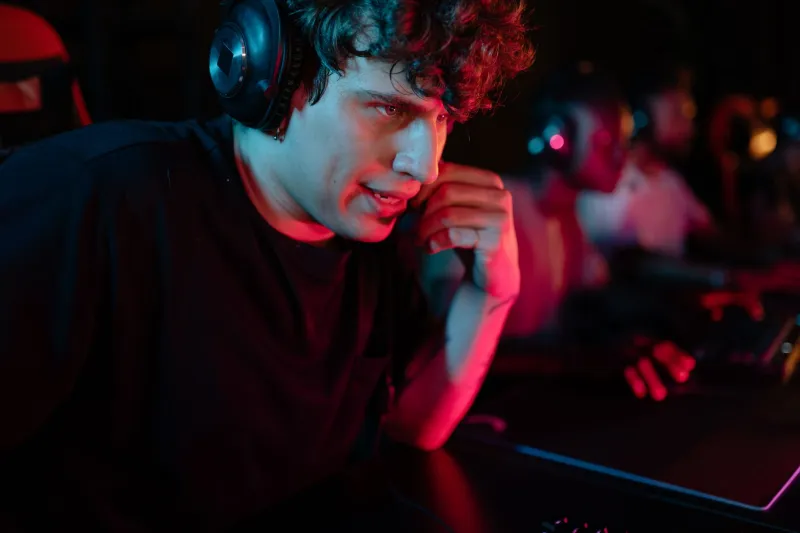
You've been there. Four of your teammates are dead. The chat is spamming. You're solo against two — maybe three — opponents with full utility, and the round clock is bleeding out. Your crosshair wobbles. Your fingers go stiff. You peek a corner you've cleared a hundred times in practice and somehow miss a standing still target.
Then there's the other guy. Same situation, different outcome. He isolates angles, controls his breathing, makes decisions in half a second, and somehow comes out on top. No panic. No hesitation. Just execution.
What's the difference? It's not raw mechanics. It's not hours logged. It's something deeper — and the good news is, it's trainable.
Why Your Brain Betrays You at the Worst Possible Moment
When pressure spikes, your body doesn't know the difference between a ranked match and a real-world threat. The amygdala — the part of your brain that handles fear responses — fires up, flooding your system with cortisol and adrenaline. Heart rate jumps. Fine motor control degrades. Your prefrontal cortex, the part responsible for decision-making and pattern recognition, starts losing bandwidth to the panic response.
This is called "cortical inhibition" in sports psychology, and it's the same mechanism that makes a college basketball player brick free throws in the final seconds of a conference championship. In competitive gaming, it shows up as jittery aim, tunnel vision, poor rotation decisions, and that gut-sinking feeling of playing on autopilot — except the autopilot is broken.
The players who clutch consistently aren't immune to this. They've just built systems to work through it.
The Cognitive Trick Top US Competitors Use to Slow Time Down
One of the most talked-about mental frameworks in US esports circles right now is something coaches call "process anchoring." Instead of thinking about the outcome — winning the round, saving the game, not letting your team down — elite clutch players force their attention onto a single, immediate task.
Not "I need to win this 1v3." Instead: "Find cover. Identify one angle. One shot."
This isn't just motivational fluff. Narrowing your cognitive focus to the next actionable step reduces the mental load your brain is juggling, which directly improves reaction time and decision accuracy. Sports psychologists at universities like the University of Michigan and Penn State have studied this in traditional athletes for decades. Esports performance coaches are now applying the same research to competitive gaming with real results.
Practice this during low-stakes situations first. In your next deathmatch session, deliberately put yourself in unfavorable positions and force yourself to verbalize — out loud or internally — only your next micro-action. "Peek left. Aim chest. Fire." Build the habit before the habit needs to perform under pressure.
Breathing Isn't Just for Yoga People
Look, we get it. Telling a competitive FPS player to "focus on their breathing" sounds like something your gym teacher would say before a standardized test. But the physiology here is legitimate and the application is practical.
Specifically, box breathing — four counts in, four counts hold, four counts out, four counts hold — activates the parasympathetic nervous system and can bring your heart rate down measurably within 60 to 90 seconds. Military special operations units use it. High-stakes poker players use it. And a growing number of professional esports players are quietly using it between rounds and during timeouts.
The key is that you can't do this for the first time in a critical moment. It has to be practiced until it's automatic. Spend two minutes doing box breathing before every ranked session for the next two weeks. Your nervous system will start to associate the technique with a calm, focused state — and you'll be able to trigger that state faster when it counts.
Mechanical Drills That Build Clutch Confidence
Mental frameworks only go so far if your mechanics haven't been stress-tested. Here are three drills designed specifically to simulate pressure and build the muscle memory that holds up when your brain is working against you.
1. The Disadvantage Drill In whatever aim trainer you use — Aimlabs, KovaaK's, whatever — set your scenario to a difficulty level where you're failing about 40% of the time. Not so hard it's useless, but uncomfortable enough that every session has genuine stakes. Perform the scenario immediately after doing 30 seconds of intense physical activity — jumping jacks, push-ups — to artificially elevate your heart rate. Train your mechanics to function in a degraded physiological state.
2. The Verbalization Loop During practice matches or lower-stakes ranked games, narrate your clutch situations out loud. Say what you're doing before you do it. This forces your prefrontal cortex to stay engaged and prevents the autopilot freeze response. It feels ridiculous at first. Do it anyway.
3. Post-Clutch Review — Win or Lose After every clutch situation — whether you won or lost — pull the replay and watch it back within 24 hours. Don't watch to cringe. Watch to identify the exact moment your decision-making changed. Was it when the second enemy appeared? When the timer hit 20 seconds? Identifying your personal "break point" lets you build mental preparation specifically around that threshold.
The Mindset Shift That Actually Changes Everything
Here's the part most strategy guides skip: the players who clutch most consistently don't think of pressure as a problem to solve. They've reframed it as information.
Elevated heart rate means the situation matters. Tunnel vision is your brain trying to help you focus. Shaky hands are energy that can be redirected into controlled aggression. This cognitive reframe — borrowed from performance psychology and increasingly applied in esports coaching — doesn't make the pressure disappear. It makes the pressure useful.
NBA players talk about this. Special forces operators talk about this. And quietly, the best clutch players in North American competitive gaming are talking about this too, even if they describe it differently. "I just lock in." "Everything slows down." "I stop thinking about losing."
That's not magic. That's a trained relationship with pressure.
Start Building Your Clutch IQ Now
The gap between a player who folds in a 1v2 and one who converts it more often than not isn't mechanical skill. It's not even experience, exactly. It's a set of practiced cognitive habits — process anchoring, controlled breathing, stress-inoculated mechanics, and a fundamentally different interpretation of what pressure means.
None of this happens overnight. But it does happen. Start with the box breathing before your next session. Add the disadvantage drill twice a week. Review your clutch moments — good and bad — without ego.
The killing floor rewards preparation. Most players show up hoping to get lucky. The ones who own the leaderboard show up already knowing how they're going to respond.
Be the second type.