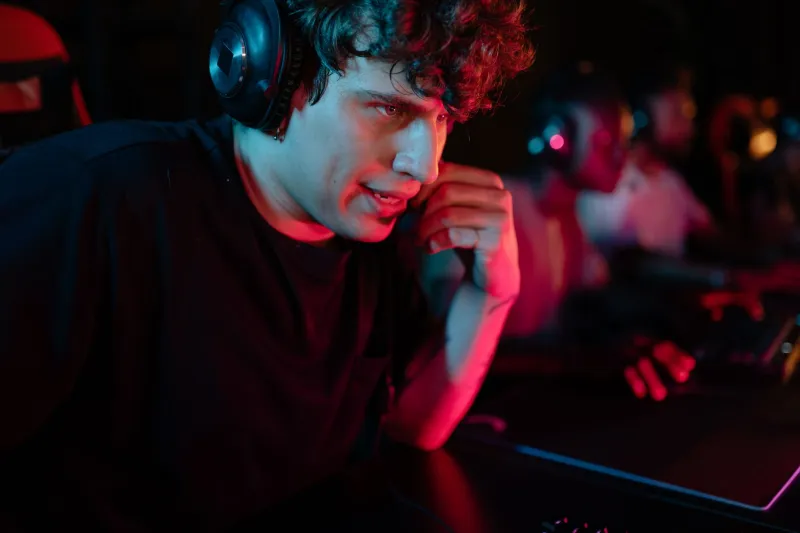
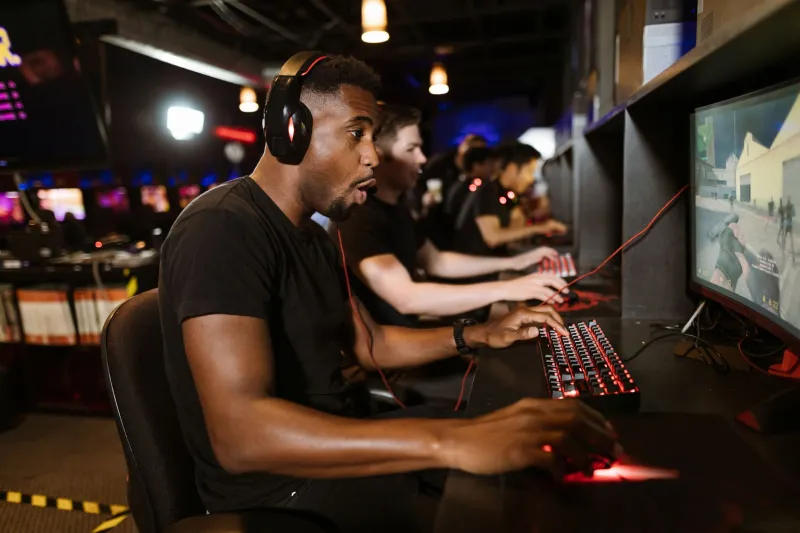
Loud Mouths Lose: How Elite US Ranked Players Are Weaponizing Silence to Break Enemies
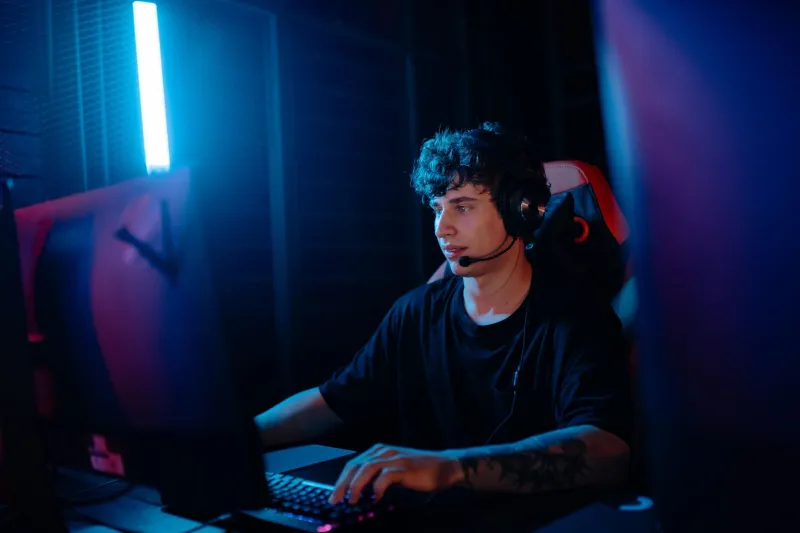
Open any ranked lobby at peak hours and you'll hear the same chaos — five people talking over each other, someone rage-explaining their death, a support player narrating every single pixel on the map. It's noise. And noise, as it turns out, is one of the biggest competitive liabilities you can carry into a high-stakes match.
The players quietly climbing leaderboards right now? A lot of them have almost nothing to say.
This isn't about being antisocial or tilted into mute mode. It's a deliberate, structured approach to communication that's been spreading through elite US ranked circles for the past couple of years. Call it ghost protocol. Call it tactical silence. Whatever you name it, the results are hard to argue with.
The Problem With Constant Callouts
Most players treat voice chat like a live commentary track. Every move gets announced. Every death gets debriefed in real time. Every rotation gets telegraphed to teammates — and whether they realize it or not, sometimes to enemies too.
Here's what that constant stream of information actually does: it trains your opponents to read your team's behavioral patterns. In games with proximity voice, positional callouts can become leaks. But even in games where enemies can't hear you, over-communication creates a different problem. It floods your own team's cognitive bandwidth at exactly the moments when processing speed matters most.
Neuroscience has a term for this — cognitive load. When your brain is simultaneously executing a mechanical play, tracking enemy positions, and filtering through four teammates talking, something gets dropped. Usually it's the thing that would've won you the fight.
Elite players figured this out the hard way. And the ones who acted on it started winning differently.
What Emotional Contagion Is Doing to Your Rank
There's another layer here that doesn't get talked about enough in gaming spaces, and it's called emotional contagion. The concept is straightforward: humans unconsciously mirror the emotional states of people around them. In a physical room, this happens through body language and tone. In a voice chat, it travels purely through sound.
When a teammate groans after dying, when someone starts clipping their words short because they're frustrated, when the energy in the lobby shifts from calm to anxious — you feel it. Your heart rate ticks up slightly. Your decision-making compresses. You start playing faster and sloppier than you intended.
This is the mechanism that turns a single bad round into a full collapse. One person's tilt becomes a contagion that spreads through the whole squad in under ninety seconds.
The ghost protocol answer to this is blunt: limit the transmission vectors. If your teammates are spiraling, the less you hear and the less you respond, the more insulated your own mental state stays. This isn't cold — it's survival.
Callout Reduction: What It Actually Looks Like
Going quiet doesn't mean going dark. The players doing this well aren't muting themselves entirely — they're trimming communication down to the absolute minimum viable signal.
Think of it like military radio discipline. Operators on a mission don't chat. They transmit only what's operationally necessary, in the shortest form possible, at the right moment. Everything else is silence.
In practice, this means:
Pre-round alignment only. Essential strategic information — position assignments, expected enemy patterns, win condition priorities — gets communicated before the action starts. Once the round is live, most of that channel goes quiet.
Single-word or short-phrase callouts. Not "he's pushing through mid and he has his ultimate up." Just "mid, ult." Two words. The information is there. The noise is gone.
No post-death commentary. This one is brutal to implement because the instinct to explain your death is almost primal. Resist it. Your team doesn't need the debrief mid-round. It can wait, or it can be skipped entirely.
Zero emotional feedback loops. No reactions to bad plays. No sighs. No "bro what was that." Silence after mistakes forces the team to reset faster because there's nothing to react to.
The first time you run this in a session it feels strange. By the third game, it starts feeling like armor.
The Psychological Weapon You're Not Using
Here's where it gets interesting from a pure mind-game standpoint. Silence isn't just neutral — it's actively disorienting to opponents who are used to reading behavioral cues.
In games where any form of communication is visible (text pings, limited callout systems, even just observable team movement patterns), a squad that moves with zero telegraphing and zero emotional reaction creates a specific kind of pressure on the enemy team. There's no information to read. No frustration to exploit. No patterns to predict.
Competitive psychology research on adversarial decision-making consistently shows that uncertainty is more stressful than known danger. When enemies can't get a read on your team's emotional state or strategic intent, they start filling in the blanks themselves — and they usually fill them in with worst-case scenarios.
You become the threat they can't size up. That's a significant psychological edge before a single bullet is fired.
Some top-ranked players in the US have started treating this almost like a poker strategy. The less you give away — emotionally, verbally, behaviorally — the more your opponent has to guess. And guessing at high stakes is how people lose.
Building Your Own Ghost Protocol
If you want to start running this, don't try to flip a switch overnight. The habit of constant communication is deeply ingrained, and cutting it cold turkey usually just makes you feel isolated and off-rhythm.
Start with one rule per session. In your next ranked block, commit only to eliminating post-death commentary. Just that one thing. Notice how the lobby feels different. Notice whether your reset speed between rounds improves.
Next session, add callout compression. Force yourself to cut every callout down to its shortest useful form before you transmit it.
After a week of that, start practicing emotional silence — no vocal reactions to anything, good or bad. This is the hardest one. It's also the most powerful.
Within a few weeks you'll have built a communication baseline that's cleaner, faster, and significantly harder for both teammates and enemies to destabilize.
The Loudest Players Rarely Win
There's a reason the scariest competitors in any ranked environment tend to be the ones you barely hear. They've already internalized something that most players are still figuring out: communication is a resource, and like any resource, wasting it has a cost.
The players spamming callouts and processing their emotions in real time over voice chat are giving away information, absorbing each other's tilt, and burning cognitive bandwidth they need for execution. Meanwhile, the quiet ones are conserving all of it.
Ghost protocol isn't about being cold or checked out. It's about understanding that in the most competitive environments, every word you don't say is a word your opponent can't use against you.
Go quiet. Win louder.